

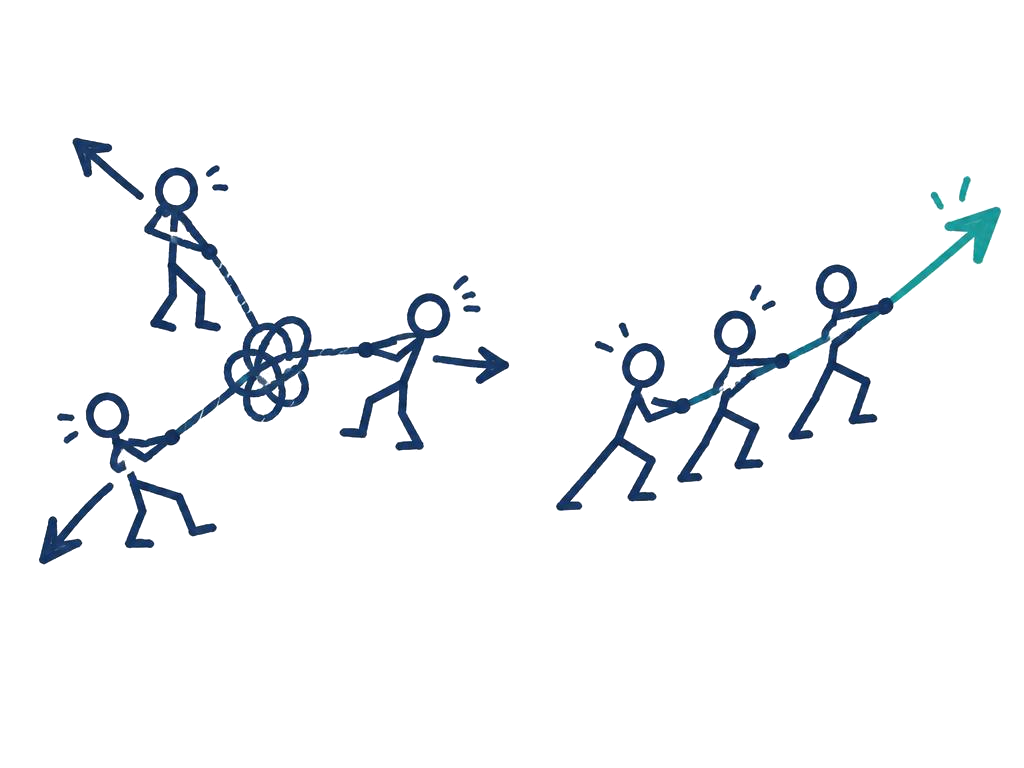
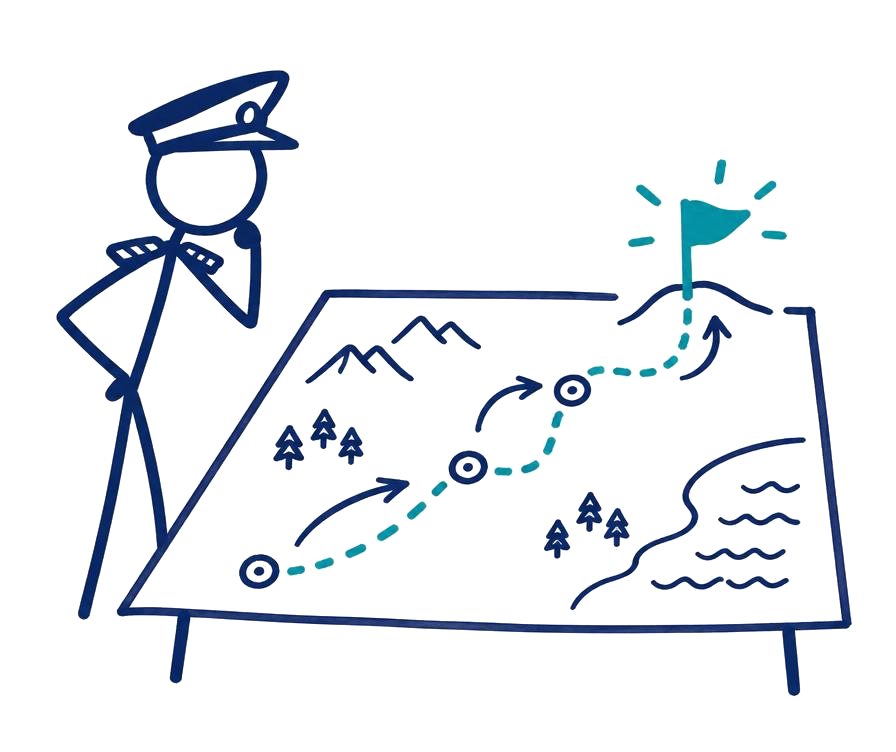
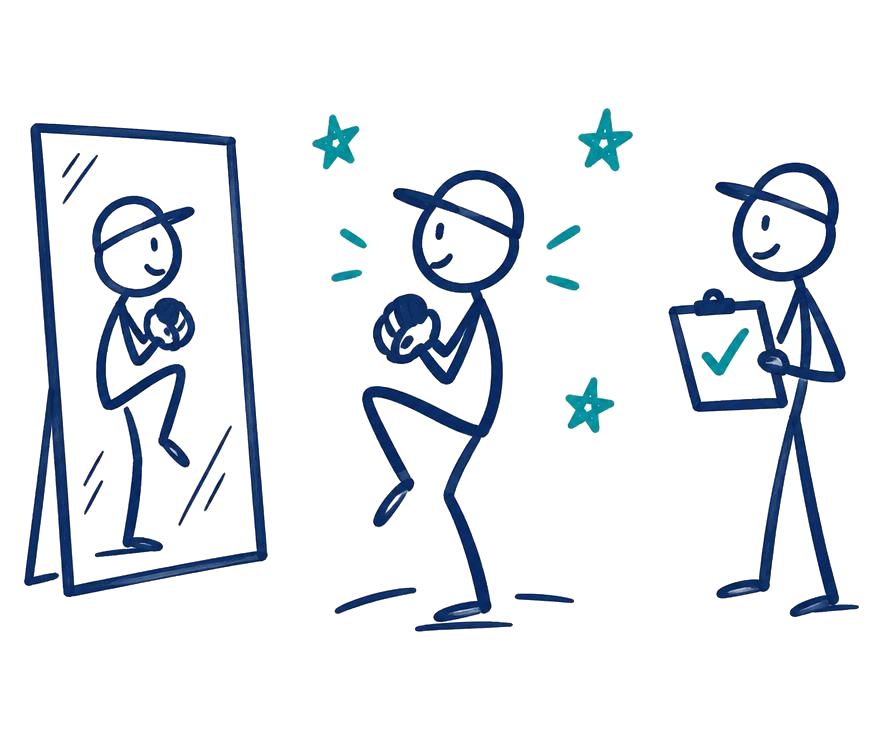


When the buyer pushes, it knows what this play trades.
Grounded in the play's commercial guide and the facts on this deal.
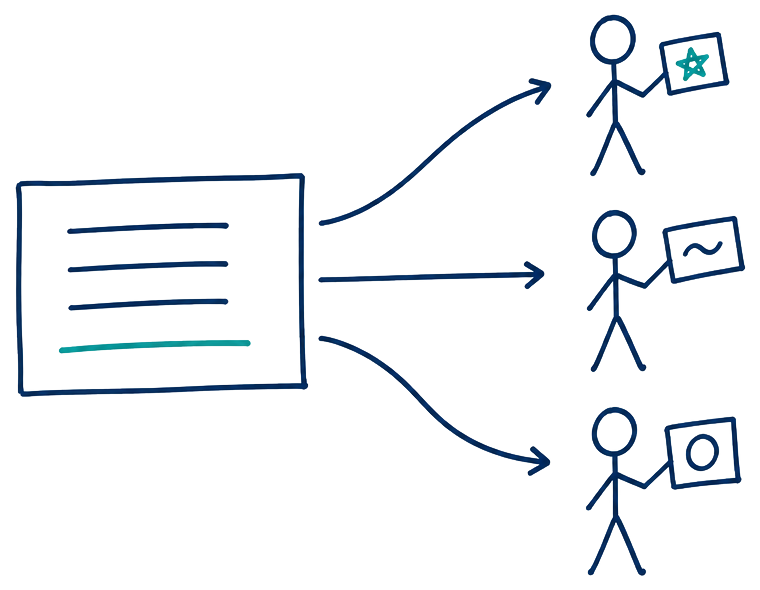
When a play misses, stop guessing which gap caused it.

Every tool you own scores the calls that happened. None of them says whether the play fits the market, whether this team can run it, or whether it is working in the deals.
Not a sequence or a battlecard. The thing those are made from.
Every motion your team runs is a play.
Win a new logo · Displace a competitor · Expand an account · Defend a renewal · Launch a new product · Enter a new segment
The positioning, the proof and the answer to every objection.
The material each stage of the deal calls for.
Which role leads and which supports, stage by stage.
The skills the play demands, with a bar for every role.
Versioned, so every rewrite is kept. Scored, so you know whether it fits the market, whether the team can run it, and whether it is working in the deals.
Three questions, one live score. Recomputed as the market, the team, and the pipeline move — drag a dimension to see how the diagnosis changes.

Dominant gap: People. Powerpunch routes the intervention to the loop that owns it.
Each loop runs on the same play and the same alignment engine. It reads the evidence, finds the gap, proposes the fix, a person approves, and the result is re-scored.

Regenerates and refines the plays the team runs — repositions stale plays, builds new ones from live signals, retires what's not landing.
Market shifts → play rewritten → win rate re-read.
Book a demo
Closes the skill gaps the play requires. Surgical microlearning, AI roleplay, coaching feedback — tied to the exact gap surfaced by the diagnosis.
Gap observed → practice assigned → readiness re-scored.
Book a demo
Surfaces execution friction inside the deal — slipping commitments, stalling stages, unanswered champion gaps — and routes them to the rep and the deal team.
Deal slips → team alerted → pipeline re-checked.
Book a demoMore data, more decks, more dashboards. None of it helps when the buyer says "30% off or we walk." What helps is a thought partner who knows the play, knows the deal and knows the latest, and works it through with you, right now.

Grounded in the play's commercial guide and the facts on this deal.

A spoken roleplay on the real deal, scored on whether you ran the play.
Your deals, your signals, and the current version of the play.
Type or speak. Every answer comes from your own context: your role, your accounts, your deals and the play each account is worked under. Every answer cites the record it came from.
Nothing you say approves anything: an action is a proposal you review. It coaches you on the play; it never speaks to your customer.
One play. Every role.
A core play carries the message, proof points, materials, and skill requirements. Segment variants add context without losing the strategy.

Shared positioning, proof points, and commercial case.
Specific buyer concerns, validation needs, and role requirements.
Each role works toward the same customer outcome.
AE · this play
Connect the buyer's priorities to the play's commercial case.
Illustrative workflow · fictional play and role requirements
Evidence closes the loop
Strategy becomes a play. The play sets the skills. Field execution supplies the evidence for the next revision.
Field signal · attached to the play
A recorded objection exposes a missing step in the segment play. A signal points to the play, not automatically to a person's skill.
Illustrative sequence · selecting a step does not approve or execute an action
Build on the stack you already use
Powerpunch is not a replacement CRM, call recorder, or course catalogue. The play gives recorded activity a shared strategic context.
Category relationships—not a claim that every named system has an available connector. Source availability is confirmed for your setup.