
You launched the play. The kit is in the portal. Enablement ran the kickoff. A few weeks later, the motion still isn’t showing up in the deals you care about.
The usual response is more training, a tighter battlecard, or a reminder to “actually use the play.” Sometimes that’s right. Often it isn’t. The stall can mean the play doesn’t fit these accounts, the team isn’t ready to run it, or the play never makes it into the deal. Those are three different problems. They look identical in a pipeline review.
If you lead sales, the useful question is not “did we launch it?” It is “where did sales play execution break — and which gap caused it?”
Launching a play is not the same as running it
Most revenue teams are good at launch: a narrative, a deck, a module, a picklist. None of that is sales play execution.
Execution is narrower and harder to fake: a named motion, aimed at a kind of account, actually being run by a specific team, in live deals, in a way you can inspect. Opening the kit is sales play adoption. Completing the module is training completion. Neither tells you whether the play reached the buyer.
That is why measuring sales plays with adoption metrics alone will mislead you. The portal can look busy while the pipeline does not move. If you only watch launch hygiene, you will miss the gap that is actually costing the motion.
A play, as I mean it here, is not a sequence, a campaign, or a battlecard. Those are artifacts. The play is the thing they’re made from: how your company wins a kind of deal — what to say, what to bring, who does what, and what each role has to be good at.
Why sales plays fail: three gaps that look like one miss
When a motion underperforms, the default diagnosis is that sellers need more coaching. That is the right fix for one of the three gaps, and wasted motion for the other two. Before you sponsor another enablement sprint, separate the miss.
1. Strategy: is the play the right fit for these accounts?

A play can be well written and still be wrong for the accounts you’re running it against. The buyer or the competitive trigger has changed. You may be using a greenfield narrative in a displacement deal, or one global play where a segment needs a different path.
Fit problems do not show up as “reps aren’t trying.” They show up as well-run conversations that still don’t advance, or as a motion that works in one segment and stalls everywhere else. More roleplay will not fix the assumptions.
Ask:
- If we wrote this play this week, which assumption — buyer, trigger, competitor, price, or proof — would we no longer make?
- Of the deals tagged to this play, how many are actually in the account set it was built for?
- If the stall is concentrated in one segment, region, or deal type, is that a skill problem, or a variant we never wrote?
If the answers are uncomfortable, stop coaching the old narrative. Revise the play, restrict where it is used, or retire it. A team can be excellent at running the wrong motion.
2. Skills: is the team ready to run it?

Sometimes the play is right and the accounts are right, and the team still cannot run the hard parts. The play may ask the AE to reach an economic buyer, the SE to defend a specific alternative, or a CSM to run a commercial conversation they have never owned. The enablement catalogue can be full and still miss the bar this play sets for this role.
Readiness is not “has this person been through onboarding.” It is whether they can do what this play requires, at the level the deal will demand. Generic competency models blur that. So does coaching the skill you always coach when the gap on this motion is something else.
Ask:
- What does this play require of the AE, the SE, and any specialist — written as a bar, not as a course name?
- Have we scored the people on this motion against that bar, or only against a shared curriculum?
- In the last deal review, did we coach a skill this play doesn’t actually use?
- Who on this team could run the hardest conversation the play calls for, this week, without an overlay sitting in?
If the play is right and the bar is clear, the work is targeted practice on the unmet needs, in the week it matters — not another broad kickoff.
3. Execution: is it actually happening in the deals?
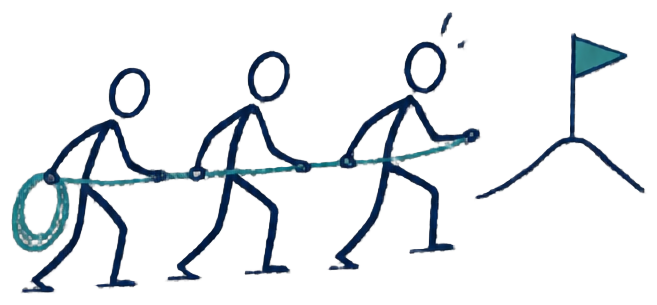
The third gap is the one adoption dashboards cannot see. The play is right. Some people can run it. And in the live deals, it still isn’t happening: the discovery wasn’t done, the stage material never reached the buyer, a commitment was made and not kept, or the deal is tagged to the motion and worked like last year’s default.
The motion did not reach the field, or it reached the field and stopped. More content in the portal will not fix it. You have to inspect the deal.
Ask:
- In the deals assigned to this play, where is the play visible — in the next step, the materials used, the people involved, the commitment made — and where is it absent?
- What did we tell the customer we would do, and did it happen?
- Are we rewarding sellers for opening the kit, or for running the motion in the account?
If the play is right and the team can run it, the work is in the deal — not another trip through training.
Measuring sales plays without fooling yourself
If you only measure sales play adoption, you will optimize for launch hygiene. You still won’t know whether the play fits, whether this team can run it, or whether it appeared in the deal.
Watch three things, separately, when you are measuring sales plays:
- Fit. Are the accounts and deals under this play the ones it was written for? Has anything in the market invalidated the assumptions?
- Readiness. Against this play’s bars, not a generic catalogue, who can run it and who cannot?
- Presence in the deal. Did the motion actually show up — in activity, in materials, in commitments — or did we only tag the opportunity?
You do not need a new system to start. You need one play, a short list of deals, and the discipline to name the gap before you prescribe a fix.
Questions a CRO can ask on Monday
Pick one play that already matters this quarter and a handful of deals tagged to it. Walk these with the owning manager, in order. Don’t skip to coaching.
- What kind of deal is this play for, and do these accounts actually match it?
- What would we change in the play if we wrote it this week?
- What does this play require of each role, and who on this team is below that bar?
- In these deals, where is the play visible, and where is it only a tag?
- Which gap is dominant here — fit, readiness, or execution — and what will we not do because of that?
The fifth question is the point. If the gap is fit, you do not assign more practice. If it is readiness, you do not rewrite the narrative. If it is execution, you do not launch another kit. Name the gap, then take the action that belongs to it.
The first pass is usually messy. That’s fine. The failure mode is treating every stall as a training problem.
If you want a partner on the diagnosis
At Powerpunch, we describe the work in one line: Launch plays. Ready teams. Accelerate wins. We score how strategy, skills, and execution are landing, then help a leadership team act on the gap they actually have.
If you want to walk that diagnosis on one of your motions, we run a guided session with you and a few managers. No integration, and no all-rep rollout. It is a working session, not a self-serve score. Request a design-partner session.
FAQ
What is sales play execution?
Sales play execution is whether a named motion is actually being run in live deals, by the team assigned to it, in the way the play was written. A kit, a tag, and a completed module can all exist while the play never reaches the buyer.
Why do sales plays fail after a successful launch?
Launch and execution are different jobs. A play can stall because it is no longer the right fit for these accounts, because the team is not ready to run it, or because it is not actually happening in the deals. One fix — usually more training — will not move all three.
How should we be measuring sales plays?
Measure more than sales play adoption. Watch fit, readiness against this play’s requirements, and whether the motion actually showed up in the deal. Adoption and completion are useful hygiene metrics. They are not a diagnosis.
What’s the first step if I don’t have a formal play system?
Choose one motion that already matters this quarter. Write down what it is for, which roles do what, and what “good” looks like. Then sit with a manager and a handful of live deals and ask the Monday questions above. You do not need a new tool to start.